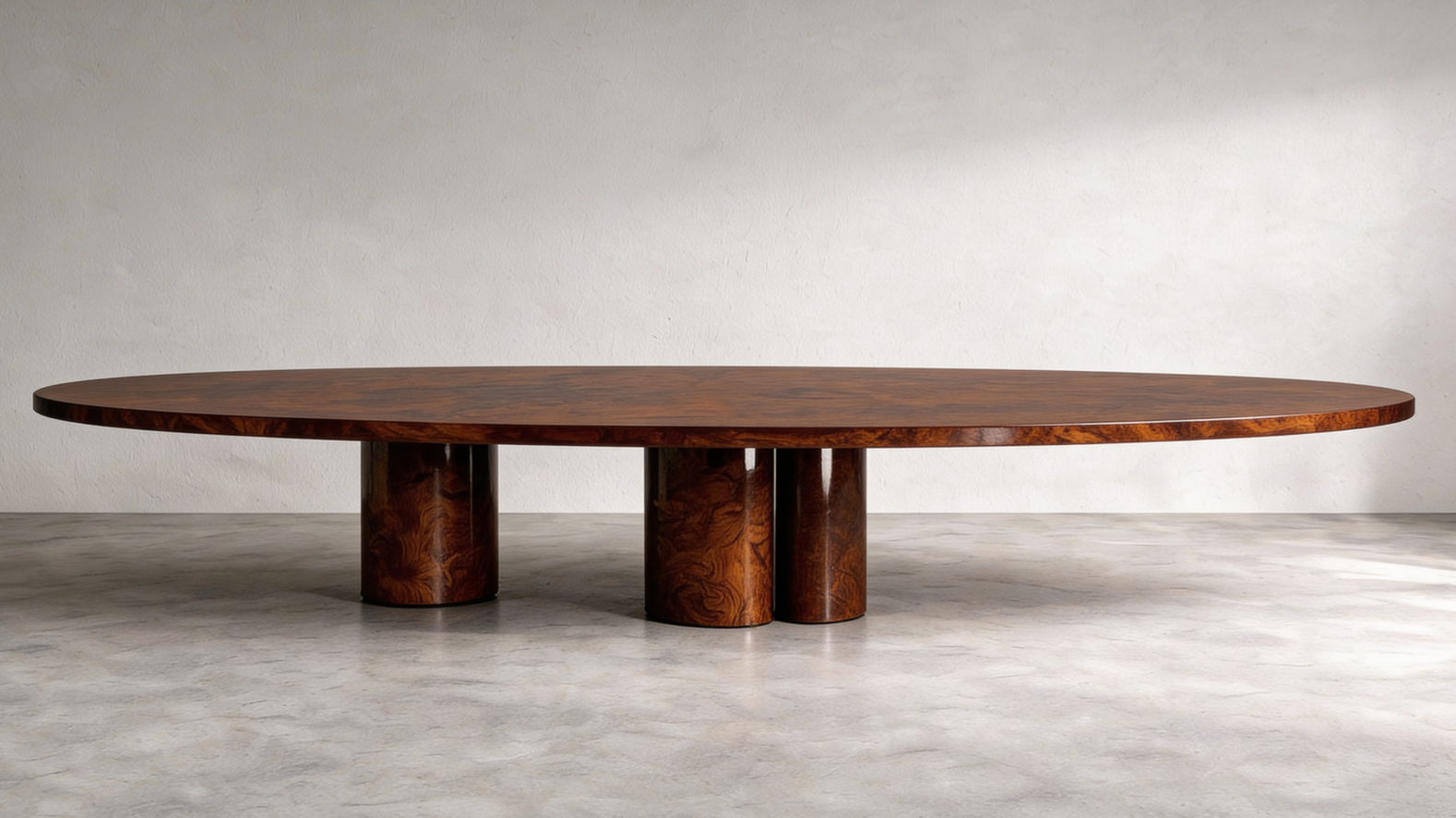
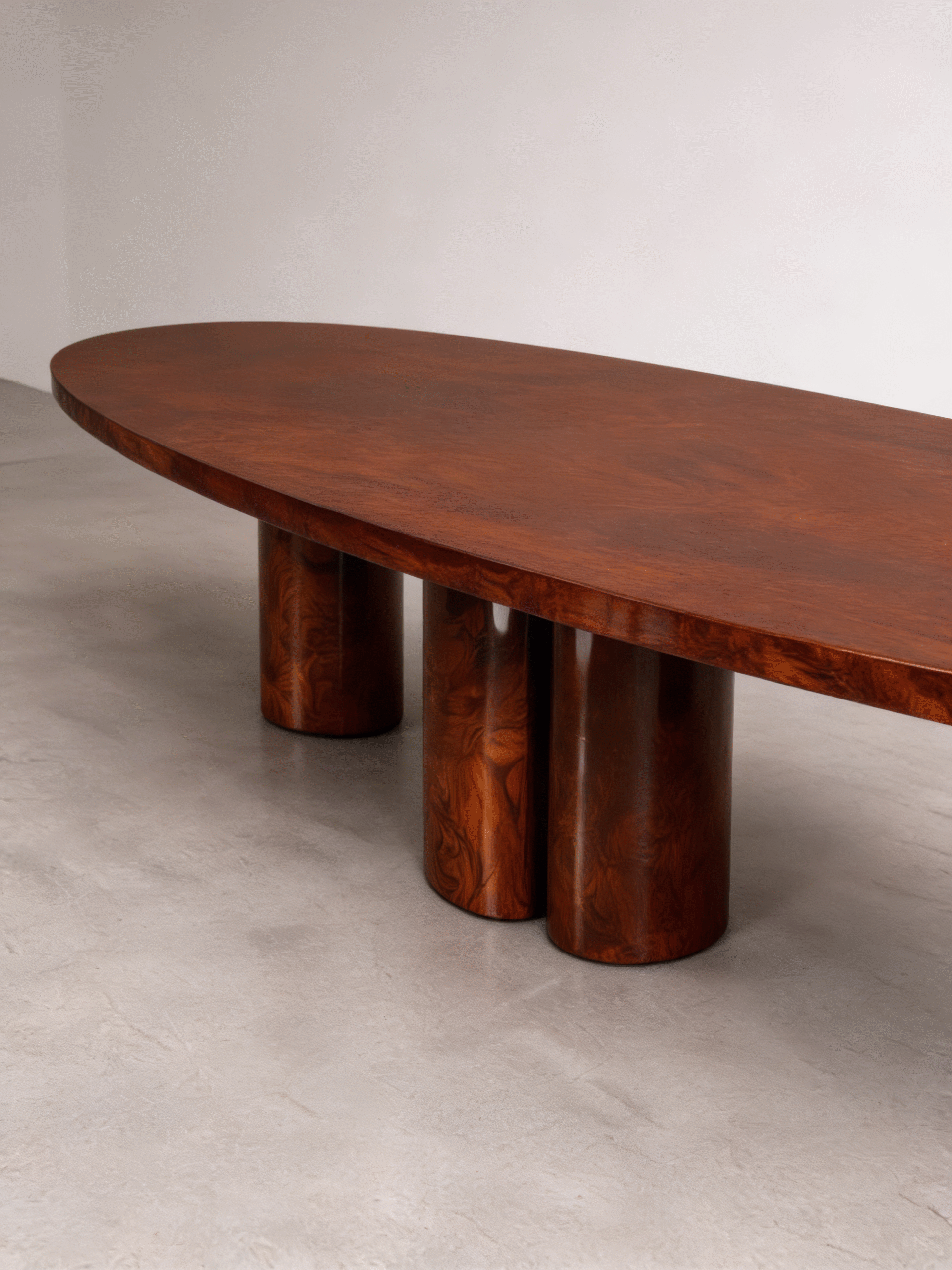
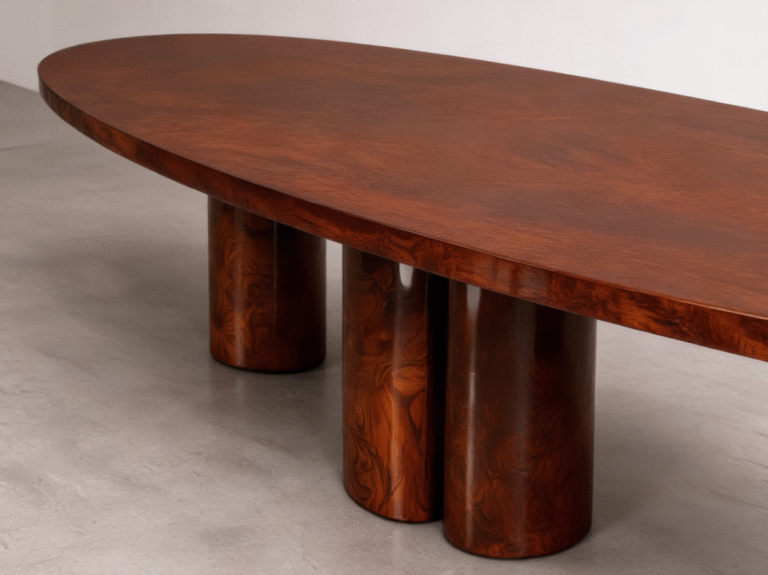
The piece is conceived as a sculptural exploration of the long irregular oval — a dining surface scaled for twelve, where the table reads as a single warm horizon held above three cylindrical pedestals. The formal idea is the marriage of figured wood with the most disciplined geometry of rounded columns. The top is one continuous irregular oval drawn at 360 centimetres in width, 120 centimetres at its widest depth, and 74 centimetres in height. The oval narrows softly toward each end so the form reads as a leaf or almond rather than a stretched circle. The pedestal cluster is composed of three vertical cylinders grouped at roughly the centre, the columns staggered slightly so each turns its own face to the light. The material is solid figured walnut — book-matched burl panels selected for the long horizontal play of amber and red-brown grain. The finish is hand-polished French lacquer through multiple layers, brought to a deep gloss that holds the depth of the grain without sealing the wood; each move in the surface remains visible beneath it. The defining gesture is the cluster of three cylindrical legs — round, full, and lacquered to a slightly darker register than the top, so the columns read as anchors rather than supports. The small offset between the three cylinders catches the floor reflection differently at each angle, the pedestal reading as both pillar and shadow. Suited to private residences, collectors’ interiors, gallery dining rooms, and museum reception sequences where a single long timber table is asked to seat twelve at the centre of a room — equally functional as dining surface, conference table, and architectural furniture.