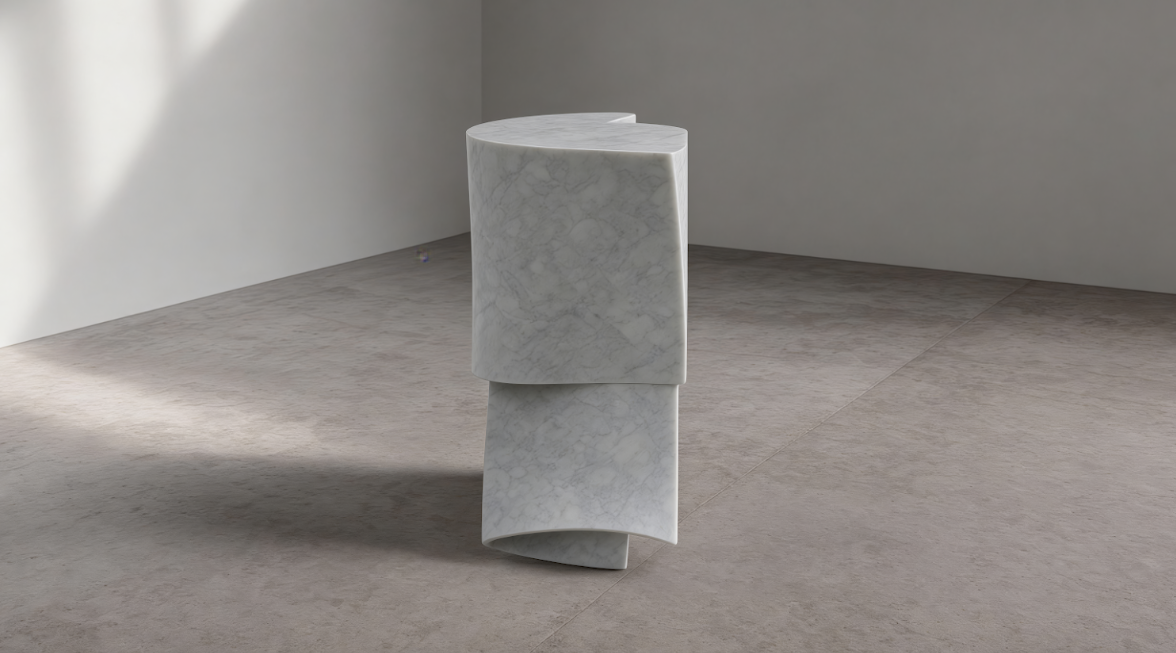
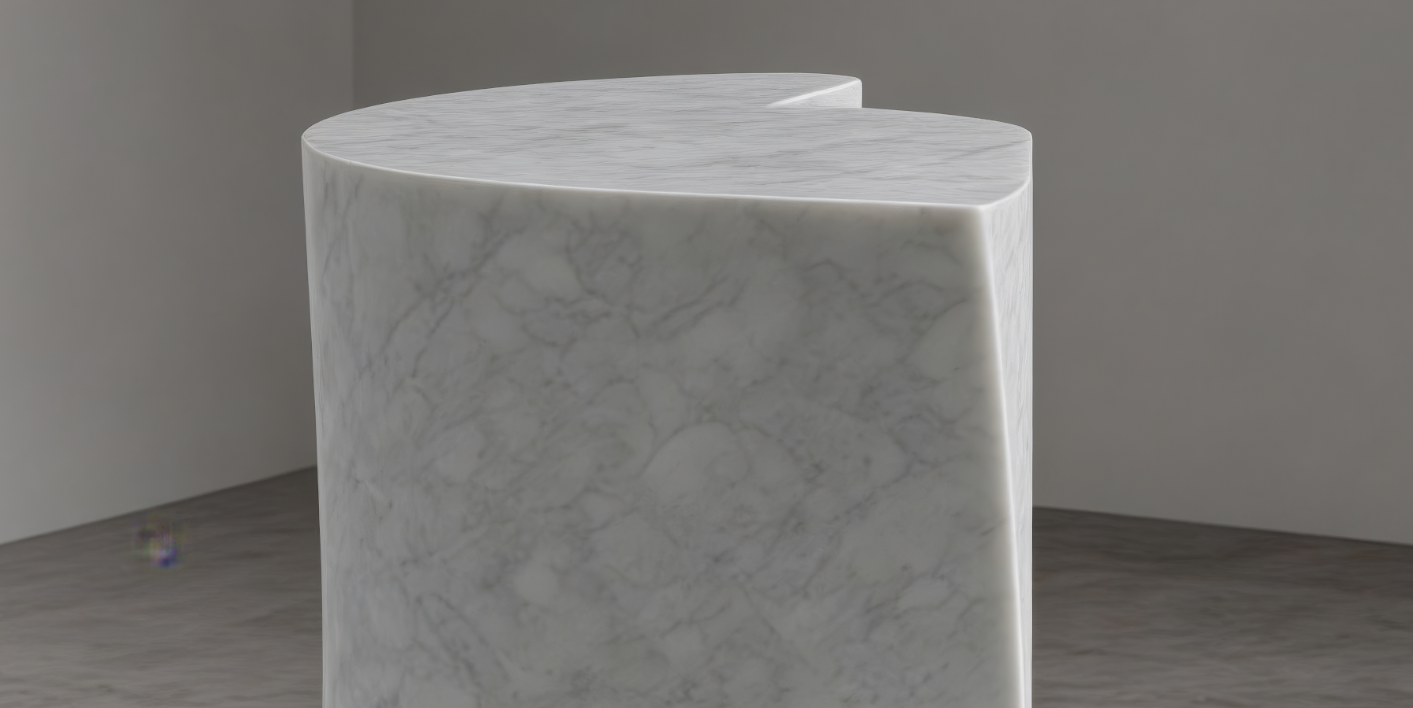
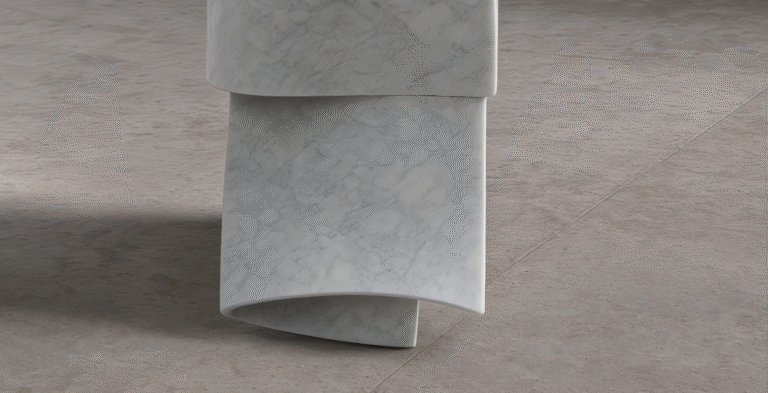
The piece is conceived as a sculptural architectural marker — a vertical alabaster volume folded into itself and balanced between object and furniture. Neither purely table nor purely sculpture, it occupies the room as a quiet stone presence, defined by light, shadow, and proportion. Carved from a single block of pale alabaster, the form is composed of two stacked folded volumes aligned along a central axis. The lower section curves inward before opening toward the floor, while the upper volume turns back upon itself to create a small horizontal surface. Together, the two elements form a compact vertical composition measuring 50 centimetres in height. The alabaster is hand-honed rather than polished, preserving the stone’s soft mineral character and translucent depth. Daylight penetrates the material gently, illuminating the edges and revealing subtle veining within the body. The surface absorbs light with a quiet glow, allowing the object to appear lighter than its mass suggests. The defining gesture is the fold itself. Rather than being carved as a solid block, the stone appears bent and redirected, creating moments of compression and release throughout the form. The meeting point between the upper and lower volumes introduces a horizontal pause within the vertical composition, emphasizing the balance between stability and movement. Viewed from different angles, the object alternates between sculpture and utility. The upper plane can receive a book, a glass, or a small object, while the overall silhouette remains architectural in character. The carved folds create changing patterns of light and shadow that animate the stone throughout the day. Suited to private residences, collectors’ interiors, hospitality environments, galleries, and architectural settings where a single stone object is asked to punctuate a space — a hand-carved alabaster form conceived equally as side table, sculptural marker, and architectural element.