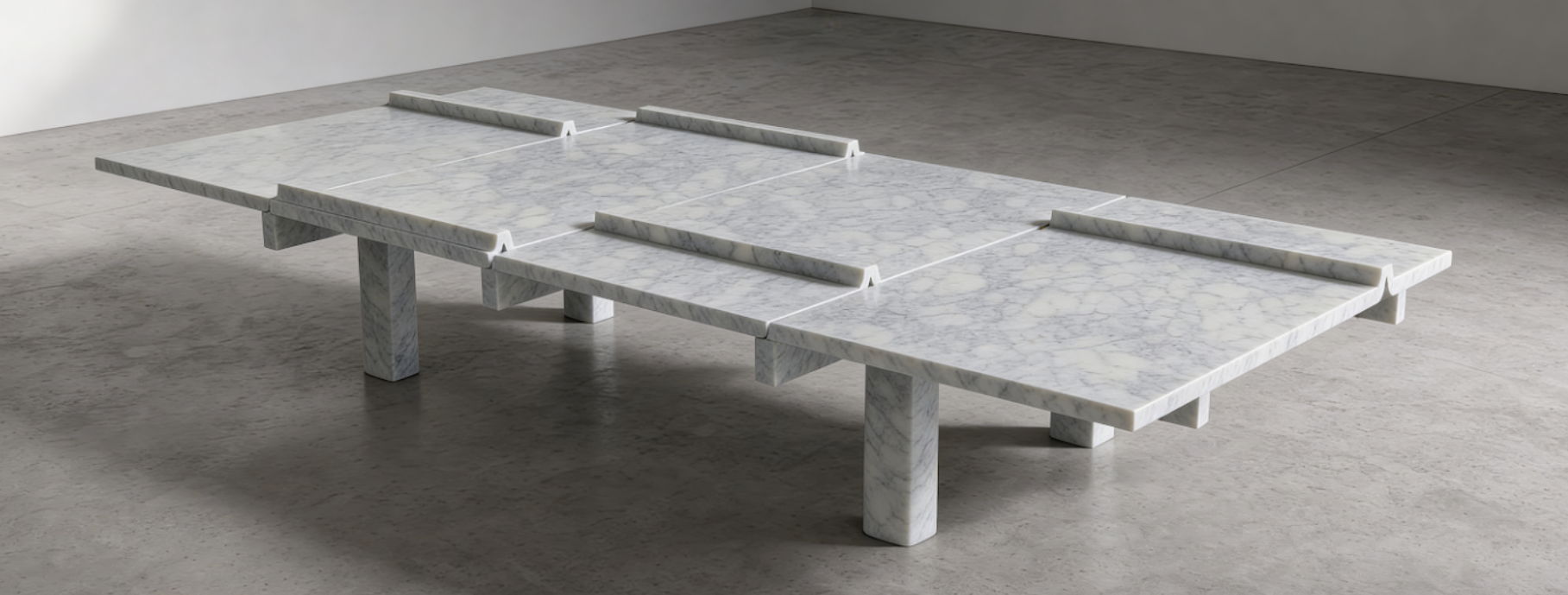
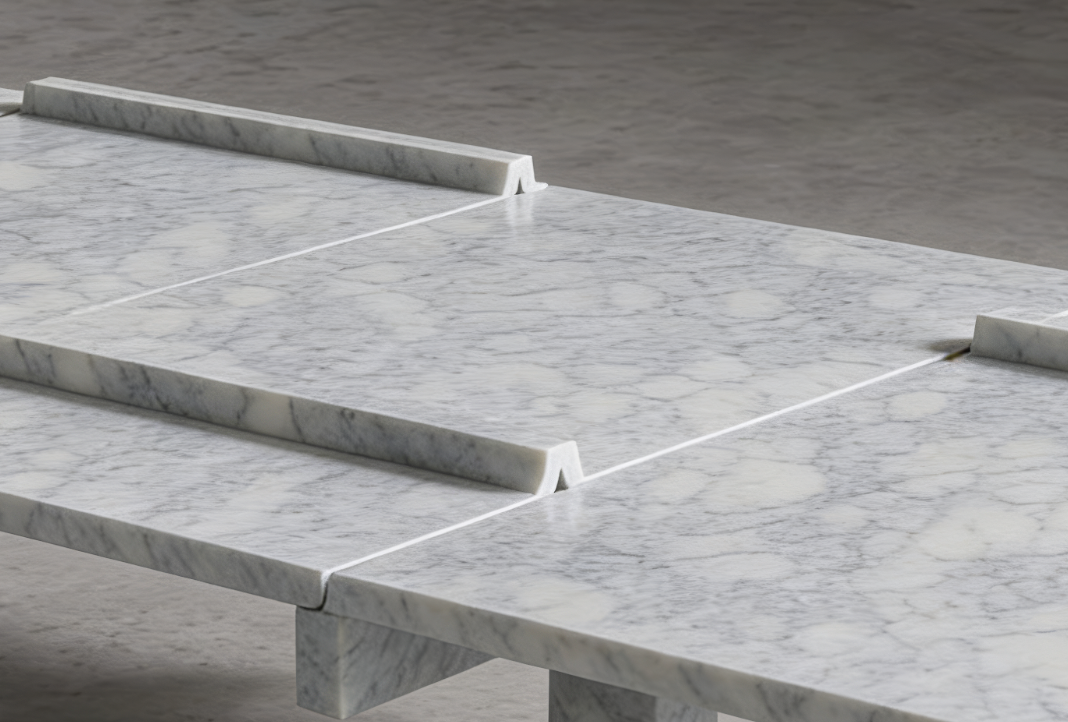
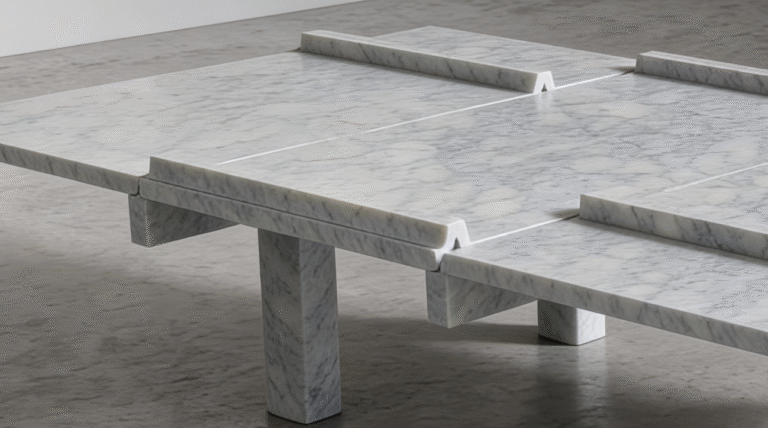
The piece is conceived as a study of one continuous slab quietly interrupted — a low rectangular field of Carrara marble laid horizontally and then crossed at regular intervals by raised stone bars. The formal idea is the table as architecture at floor plane: a wide flat plate and a sequence of beams rendered in the same light, pale material. The body is a single low rectangle, set 30 centimetres above the floor and measuring 160 centimetres along its long axis by 90 centimetres in depth. The top is divided into two elongated planes by a fine central seam; across both panels run six short raised marble bars placed in pairs near the front and back edges and at the centre line. Below the top, two pairs of square columnar legs in the same stone are set inward from the corners, so the slab visually rests on rather than grows from them. The exterior is honed Carrara marble throughout, finished by hand and read in soft daylight as a warm, near-white field traversed by quiet grey veining. The raised bars act less as decoration than as measured relief — a slight interruption designed to disrupt shadow and draw attention to the stone’s surface. The defining gesture is the bars themselves: the low, raised channels laid across the horizontal plane. They break the continuity of the slab just enough to register structure and rhythm while preserving the overall calm. The table is at once one slab and a small landscape of relief. Suited to private residences, collectors’ interiors, and gallery settings where a low, lateral marble plane is asked to anchor a seating arrangement — a horizontal table conceived as an architectural monument rather than a piece of furniture.